For generations, one phrase has defined successful real estate development: location, location, location. Whether developing a corporate headquarters, retail center, industrial facility, or residential community, selecting the right site is often the single most important decision in determining long-term success.
The same principle applies to Advanced Air Mobility. As eVTOL aircraft move closer to offering commercial electric air taxi services, vertiports will become the critical eVTOL infrastructure that connects people with this new mode of transportation. But successful vertiport development isn't simply about finding available land. It requires understanding where people need better mobility, how those communities move today, and which locations can best support safe, efficient, and sustainable operations for decades to come.
Fortunately, we are starting from a position of strength in many of the most congested markets in the U.S. as we develop vertiport networks in New York/New Jersey, Florida, North Texas and Southern and Northern California. As a wholly owned subsidiary of Atlantic Aviation, VertiPorts by Atlantic has access to our parent company’s 109 fixed base operation (FBO) sites across the country that support air transport today and can efficiently be transformed to add vertiport service. These FBOs serve as an important foundation for our vertiport networks, which will also include newly constructed “greenfield” sites as well as redeveloped “brownfield” sites, such as existing infrastructure, buildings and parking garages.
Regardless of the location, every vertiport site selection effort begins with one simple question: Where can advanced air mobility create the greatest value?
A Data-Driven Approach to Site Selection
Before evaluating a potential property, we seek to understand the market it will serve.
Our planning process begins with proprietary demand analysis and predictive modeling that examines how people travel today and where advanced air mobility can provide meaningful improvements. We analyze factors such as population demographics, existing transportation options, pricing expectations, commuter behavior, and anonymous mobility data to identify travel corridors where eVTOL service can reduce travel times and improve connectivity.
This approach allows us to move beyond assumptions and focus on locations with measurable demand for new transportation options. Just as importantly, it helps us understand how individual vertiports fit within a larger regional network rather than viewing each site as a standalone project.
Demand, however, is only one piece of the equation.
Once a high-potential market has been identified, we begin evaluating the real estate itself. Land availability, site access, airspace compatibility, zoning, utility infrastructure, community support, operator readiness, and long-term commercial viability all become part of the site selection process.
Equally important, VertiPorts by Atlantic is not developing vertiports on speculation. Our focus is on markets where eVTOLs are being deployed. We are working alongside aircraft operators, airport authorities, municipalities, and other stakeholders to develop agnostic infrastructure that supports future commercial operations.
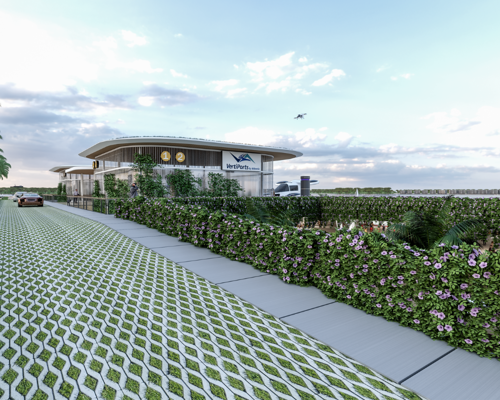
From Strategy to Site Selection
Identifying the right market is only the beginning. Once a market has been selected, the focus shifts to identifying specific sites that can support long-term AAM operations while meeting the operational, regulatory, and community requirements unique to each location.
That process requires more than simply finding available land. Every opportunity must be evaluated through both an aviation and a real estate lens, balancing site characteristics, ownership, accessibility, surrounding development, and long-term growth potential with the transportation needs identified through our demand modeling.
To complement our in-house planning and development expertise, VertiPorts by Atlantic selected commercial real estate leader Cushman & Wakefield as its preferred advisor for site identification efforts across key U.S. markets. Working together, we are evaluating a wide range of opportunities, from compact urban infill sites, including locations atop existing parking structures, to larger development sites capable of supporting future vertiport operations.
Most recently, we have seen real estate developers proactively reaching out to us to explore the opportunity to develop vertiports on their properties. These developers have quickly recognized the value of integrating a clean, quiet, and efficient transportation solution that can seamlessly connect people to and from their sites. By enhancing accessibility and connectivity, vertiports have the potential to increase the attractiveness and long-term value of their developments, making them a compelling component of their overall investment strategy. This collaborative approach combines VertiPorts by Atlantic's expertise in AAM infrastructure planning with real estate developers, and Cushman & Wakefield's deep knowledge of local real estate markets. This will help us identify sites to develop scalable vertiport networks in some of the nation's fastest-growing and most mobility-constrained regions.
While every community presents unique opportunities, our development strategy generally focuses on three types of sites.
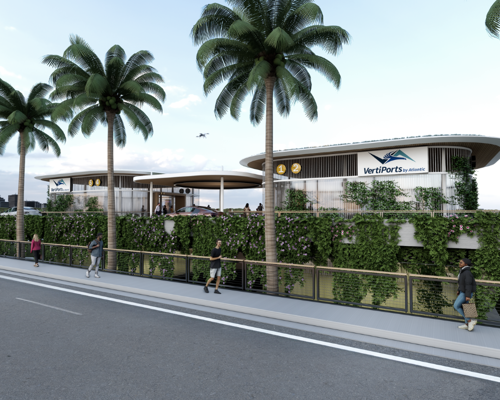
Building on Existing Aviation Infrastructure
As noted earlier, one of VertiPorts by Atlantic's greatest advantages is our connection to Atlantic Aviation's nationwide network of more than 100 fixed base operations (FBOs).
Most of these facilities are already located within high-demand aviation markets and operate inside established airport environments. They provide an opportunity to support future eVTOL services while leveraging decades of operational experience, existing aviation infrastructure, and established relationships with airport operators and local communities.
These locations also offer a practical, and capital-efficient, pathway toward commercial AAM operations because they are already integrated into the aviation ecosystem.
A strong example is Atlantic Aviation's redevelopment of the East 34th Street VertiPort in New York City. As one of the country's premier urban aviation facilities, the site demonstrates how existing aviation infrastructure can evolve to support the next generation of aircraft while continuing to operate within one of the nation's most complex transportation environments.
While existing aviation facilities will play an important role in early network development, they represent only one part of the broader strategy.
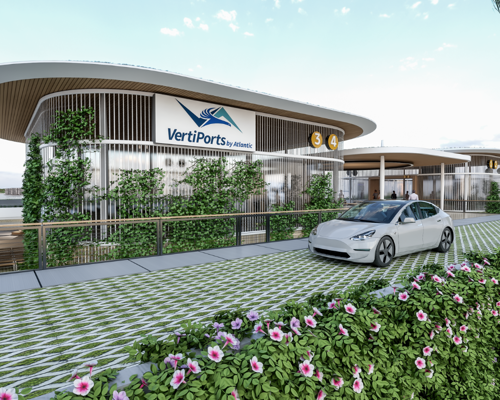
Unlocking Brownfield Opportunities
Not every successful vertiport needs to begin at an airport.
Across many metropolitan areas, underutilized commercial and industrial properties present opportunities to create new transportation infrastructure while bringing renewed value to existing sites.
Brownfield redevelopment allows VertiPorts by Atlantic to evaluate strategically located properties that may already benefit from existing roadway access, utilities, proximity to major activity centers, and strong first- and last- mile connectivity. In many cases, these sites can be transformed into higher and better uses that improve mobility while complementing surrounding development.
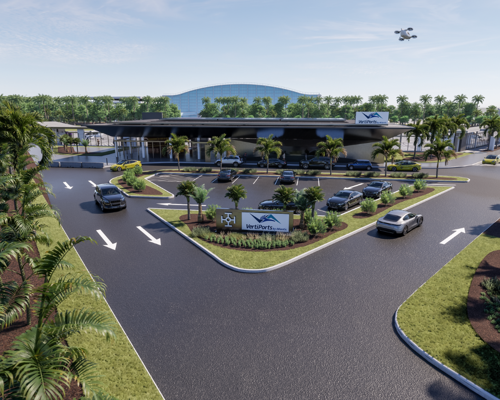
Our planned vertiport at Donald J. Trump International Airport (DJT), previously known as Palm Beach International Airport (PBI), illustrates this approach. Located near an established transportation hub, within the site of a former car rental facility, the project demonstrates how thoughtfully selected redevelopment sites can strengthen regional connectivity by taking advantage of existing infrastructure and attractive nearby transportation assets, such as a popular commercial airport.
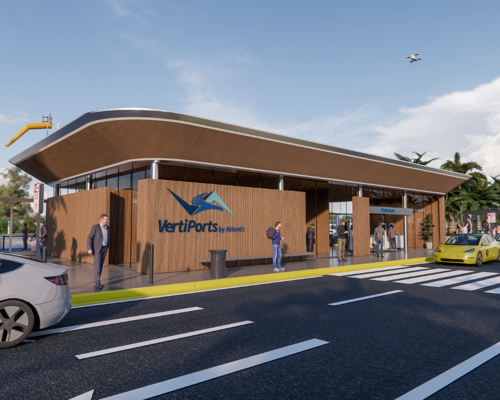
Purpose-Built Greenfield Development
In some locations, the best solution is starting with a clean slate.
Greenfield development provides the flexibility to design facilities specifically for future AAM services while tailoring each project to the needs of the surrounding community. These sites may facilitate suburban growth, new commercial districts, or emerging mobility corridors where existing infrastructure is limited.
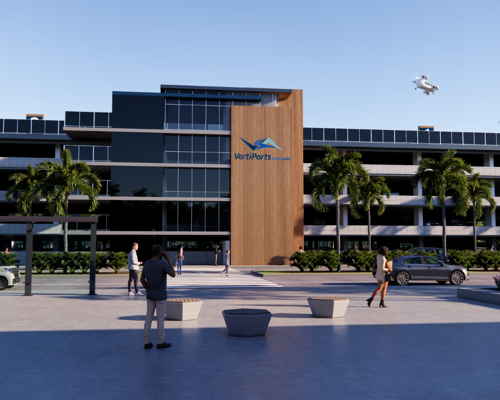
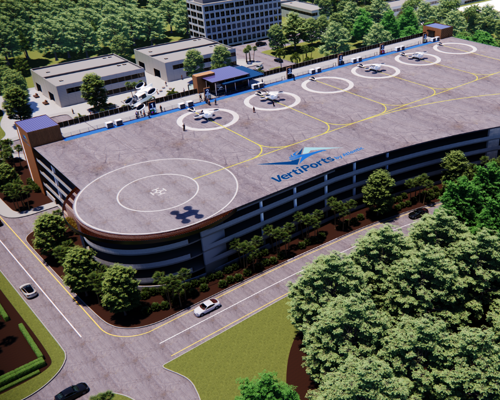
In Fort Lauderdale, we have been in discussions with the city along with a garage developer to construct a parking garage topped by a vertiport, with an EMS station integrated. This example demonstrates the potential health, safety and convenience benefits of public private partnerships behind greenfield sites.
Purpose-built vertiports also allow greater flexibility in facility design, passenger flow, vehicle access, eVTOL charging infrastructure, and future expansion as the industry grows.
Every Community Requires a Different Solution
One of the lessons we've learned is that there is no universal blueprint for vertiport development. The right answer depends on the market, the community, and the transportation challenges each project is intended to solve.
That is why successful site selection depends as much on collaboration as it does on data. VertiPorts by Atlantic works closely with cities, airport authorities, developers, operators, and community stakeholders throughout the planning process. Our goal is to ensure each project reflects local priorities while meeting the safety, operational, sustainability, and regulatory requirements necessary for long-term success.
As advanced air mobility continues moving from concept to commercial reality, thoughtful site selection will determine how effectively these new transportation networks serve the communities around them. By combining data-driven planning with flexible real estate strategies and collaborative partnerships, VertiPorts by Atlantic is laying the foundation for the next generation of connected mobility.